


The short answer
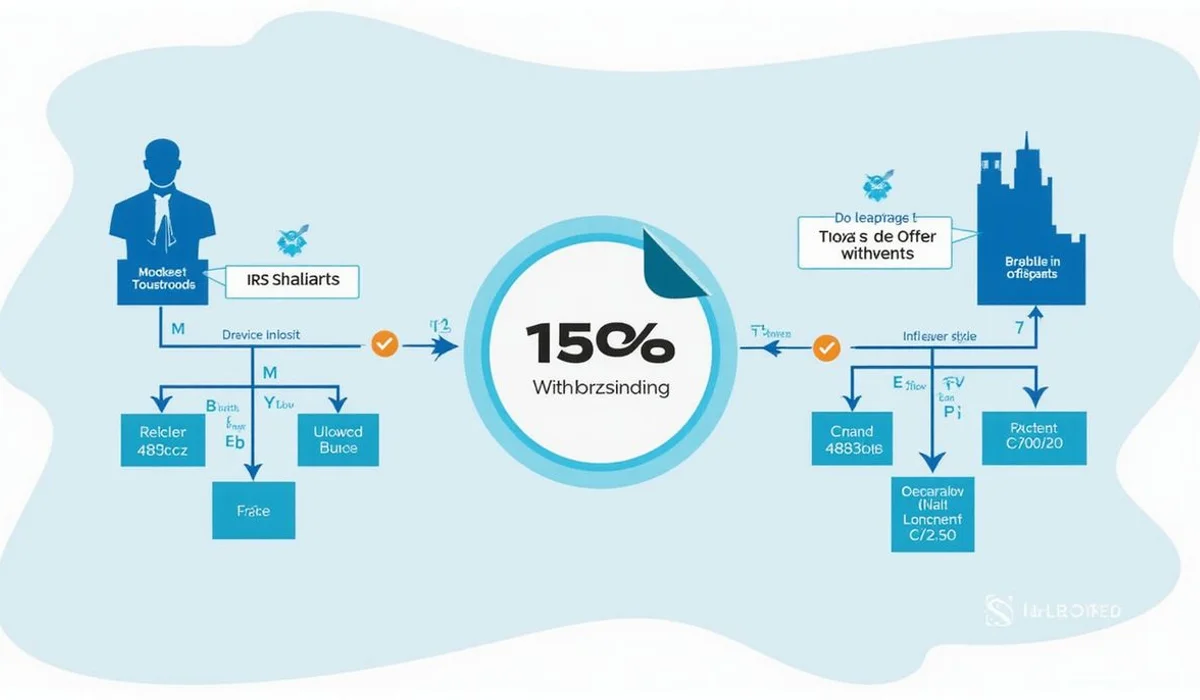
FIRPTA requires the buyer of U.S. real estate to withhold 15% of the amount realized when the seller is a foreign person, and send it to the IRS. It is applied to the sale price, not the profit, so it usually exceeds the tax actually owed. The seller recovers the difference by filing a U.S. return, or reduces it before closing.
That gap between what is withheld and what is owed is the whole story of FIRPTA in Southwest Florida. On a $1.5 million Naples condo the withholding is $225,000, and the tax on the gain is frequently a fraction of that. The money is not lost. It is just sitting with the IRS until somebody files the paperwork that brings it back.
This page covers how the withholding works and who it applies to. For the paperwork itself, see which FIRPTA form applies to your sale. For lowering the number before you close, see how to reduce or recover FIRPTA withholding.
The basic mechanic
The Foreign Investment in Real Property Tax Act of 1980 gave the United States the power to tax foreign persons on dispositions of U.S. real property interests. The IRS puts the duty on the person buying: “Persons purchasing U.S. real property interests (transferees) from foreign persons, certain purchasers’ agents, and settlement officers are required to withhold 15% (10% for dispositions before Feb. 17, 2016) of the amount realized on the disposition” (IRS: FIRPTA withholding).
Two words in that sentence do most of the damage at a closing table.
Transferee. The buyer is the withholding agent, not the seller and not the title company. The IRS is explicit that “if the transferor is a foreign person and the transferee fails to withhold, the transferee may be held liable for the tax.”
Amount realized. This is not the gain and it is not the net proceeds. The IRS defines it as the sum of the cash paid or to be paid, the fair market value of other property transferred, and the amount of any liability assumed by the buyer. A seller with a mortgage, a low basis, or high closing costs still has 15% calculated off the top of the whole number.
The withholding is a deposit, not a final tax. A foreign seller has two routes to the difference: recover it afterwards by filing a U.S. return, or reduce it beforehand with a withholding certificate on Form 8288-B.
Who counts as a foreign person
The classification decides whether any of this applies. A foreign person includes:
- Nonresident aliens
- Foreign corporations, with limited exceptions
- Foreign partnerships, trusts and estates
- A single-member LLC whose owner is a foreign person, because the LLC is disregarded and the owner is the seller for tax purposes
Not foreign persons:
- U.S. citizens
- Resident aliens, including green card holders and anyone who meets the substantial presence test
- U.S. corporations, partnerships and trusts
Seasonal owners are where this gets decided, and the substantial presence test is more specific than the “183 days” shorthand suggests. The IRS counts all the days present in the current year, one third of the days in the prior year, and one sixth of the days in the year before that. A person meets the test if they were present at least 31 days in the current year and the weighted total reaches 183 (IRS: Substantial presence test). A Canadian who winters in Naples for four months a year can cross that line without intending to. We cover the distinction in detail in resident alien vs nonresident alien tax status.
Where a foreign seller and a U.S. citizen spouse own a property jointly, the withholding applies to the foreign spouse’s allocable share of the amount realized, not to the whole sale.
When the rate is lower than 15%
Both reductions turn on what the buyer intends to do with the property, which means the seller cannot create them unilaterally.
Amount realized of $300,000 or less, buyer will use it as a residence. No withholding. The statute conditions the exemption on the property being “acquired by the transferee for use by him as a residence” with an amount realized that “does not exceed $300,000” (26 U.S.C. §1445(b)(5)). The IRS adds an occupancy test: the buyer or a family member must plan to use it as a residence for at least half the days the property is in use during each of the first two 12-month periods after the transfer.
Amount realized above $300,000 but not more than $1,000,000, buyer will use it as a residence. The rate drops to 10%, by “substituting ‘10 percent’ for ‘15 percent’” (26 U.S.C. §1445(c)(4)). On a $900,000 sale that is $90,000 held back instead of $135,000.
Above $1,000,000, or any purchase that is not a residence. The full 15% applies. An investor buying to rent gets no reduction at any price.
These thresholds are statutory dollar amounts that Congress can change, and they are not indexed to inflation, so confirm the current figures before you rely on them. The FIRPTA forms and exemptions guide covers the affidavits that document each one.
What the buyer actually has to do
The buyer files Form 8288 with Form 8288-A attached and pays the withheld tax by the 20th day after the date of transfer. In practice the closing or escrow agent handles the filing and the wire, but the liability does not transfer with the task.
Getting this wrong is expensive in more than one way. The Form 8288 instructions state that “under section 6651, penalties apply for failure to file Form 8288 when due and for failure to pay the withholding when due,” that a willful failure to collect and pay over the tax can carry a penalty of up to $10,000 under section 7202, and that responsible persons can be assessed under section 6672 for the full amount that should have been withheld (IRS: Instructions for Form 8288). The section 6651 late-filing penalty accrues monthly rather than as a single flat charge, so the exposure depends on how late the filing is.
This is why every buyer of Naples property should ask for the seller’s status in writing before closing. A certificate of non-foreign status from a U.S. seller closes the question. A foreign seller means the withholding file needs to be open from the day the contract is signed.
What the seller has to do
- Get a taxpayer identification number. A foreign seller without an SSN needs an ITIN, applied for on Form W-7. The IRS will not process a withholding certificate application without the TINs of all parties, so an ITIN started late is the usual reason a Form 8288-B application stalls. Start it before the contract, not after. See applying for an ITIN in Naples.
- Collect Form 8288-A. Copy B, stamped by the IRS, is the seller’s evidence of the tax already paid. Without it the credit is difficult to claim.
- File a U.S. return for the year of sale. Form 1040-NR for individuals, Form 1120-F for foreign corporations. The return reports the sale, calculates the actual tax on the gain, and claims credit for the amount withheld.
- Claim the refund. The IRS refunds the excess of the withholding over the tax owed. The timing is bounded by the filing calendar rather than by a published processing target, which is the practical argument for reducing the withholding up front instead.
Common Naples scenarios
| Seller profile | How FIRPTA applies | Practical effect |
|---|---|---|
| Canadian seasonal owner, $900,000 sale | 15% of the amount realized, or 10% if the buyer will live in it. | $135,000 or $90,000 held at closing while the tax is computed on the gain alone. |
| Foreign seller with a U.S. citizen spouse | Applies to the foreign spouse’s allocable share of the amount realized. | The U.S. spouse’s share is not withheld on. Allocation should be documented at closing. |
| Foreign corporation or foreign LLC | Treated as a foreign person. Special rules apply to foreign corporations. | No residence exception is available, since the reductions require an individual buyer’s residence use. |
| U.S. LLC with a foreign member | Depends on whether the LLC has a single foreign owner and is disregarded. | Entity structure decides the answer. Confirm it before closing rather than after. |
The middle two rows are where Southwest Florida closings go wrong most often, because the allocation and the entity question both need to be settled while there is still time to file.
What to do if you are selling
- Start at least 90 days before closing. The IRS “will normally act on a withholding certificate application within 90 days of receipt of all information necessary to make a proper determination” (IRS: Withholding certificates). A complete application includes every party’s TIN.
- Get the ITIN first. It is the dependency that gates everything else.
- Tell the closing attorney early. Title companies need to know FIRPTA is in play before they draft, not on the day of funding.
- Plan for the U.S. return. The withholding is not resolved until the year-of-sale return is filed.
This is general information rather than advice about your transaction. FIRPTA outcomes turn on ownership structure, basis, depreciation history, treaty position and the buyer’s intended use, so confirm the details with a tax professional before you close.
Talk to us before the contract is signed
We handle FIRPTA filings for foreign sellers and their buyers across Naples, Marco Island, Bonita Springs and Fort Myers, including ITIN applications, withholding certificate applications and the year-of-sale return.
Book a consultation and we will map the withholding number, the forms and the deadlines for your sale, or read more about our international tax and FIRPTA service. Foreign owners who also rent the property should review non-resident and seasonal foreign owner filing requirements.
Frequently Asked Questions
How much is FIRPTA withholding?
The rate is generally 15% of the amount realized, which is close to the gross sale price rather than the gain. Two reductions exist when the buyer is acquiring the property to live in: the rate drops to 10% where the amount realized does not exceed $1,000,000, and withholding does not apply at all where it does not exceed $300,000. Both depend on the buyer's residence use, not on the seller's circumstances.
Does FIRPTA apply to US citizens?
No. FIRPTA withholding applies only to a foreign person disposing of a U.S. real property interest. U.S. citizens and resident aliens are outside it. A seller who is not a foreign person can confirm that with a certificate of non-foreign status, which lets the buyer close without withholding.
Who is responsible for FIRPTA withholding?
The buyer. The IRS states that in most cases the buyer is the withholding agent, and that if the seller is a foreign person and the buyer fails to withhold, the buyer may be held liable for the tax. In Florida practice the closing agent handles the mechanics, but the legal exposure stays with the buyer.
Is FIRPTA withholding the same as the tax I owe?
No. It is a deposit against the seller's eventual U.S. tax liability, not the liability itself. Because 15% is applied to the sale price and the actual tax is calculated on the gain, the amount held back is often larger than the tax due. The seller claims credit for it on a U.S. return and is refunded the difference.
How long does it take to get FIRPTA withholding back?
There is no published IRS turnaround for a FIRPTA refund, and the credit cannot be claimed until a U.S. return is filed for the year of sale, so a sale early in the year waits until the following filing season. The faster route is to apply for a withholding certificate on Form 8288-B before closing. The IRS states it normally acts on those within 90 days of a complete application.
Related service
Service
International Tax & FIRPTA
FIRPTA withholding and non-resident tax compliance for foreign sellers, seasonal expats, and foreign real-estate investors across Southwest Florida.
Related guides
How to Apply for an ITIN in Naples
Who needs an ITIN, how to apply with Form W-7, how long it takes, and why foreign property sellers need one to recover FIRPTA withholding.
Tax Filing for Non-Resident and Seasonal Foreign Owners
When non-residents and seasonal foreign owners must file US taxes — ITIN basics, rental-income reporting, and treaty considerations.
How Foreign Sellers Can Reduce or Recover FIRPTA Withholding
How foreign sellers reduce or reclaim FIRPTA withholding: withholding certificates (Form 8288-B), the residence exceptions, and the refund route on Form 1040-NR.
Need help with this in Naples?
Book a free discovery call. We'll review your situation, walk you through the options, and respond within 48 hours.
Book a Discovery Call